


About the program
The curriculum of the “Cybersecurity” program includes a structured system of modules starting with foundational subjects in mathematics, programming, algorithms, computer networks, and the basics of information security. At this stage, students develop a strong understanding of how digital systems operate and the core principles of protecting information.
Later, the program becomes more specialized and focuses on professional disciplines such as network and operating system security, cryptography, ethical hacking, data analysis, artificial intelligence, software protection, and personal data security. The final stage includes practical training, project work, and a graduation thesis, allowing students to apply their knowledge to real-world cybersecurity tasks.
Based on UK credits
What knowledge and skills will you gain during the training?
- Programming and networking
- Cybersecurity threat and risk analysis
- Information systems protection
- Working with data and digital infrastructure
- Hands-on practice with modern security tools
What does a specialist do?
- Protection of digital systems and data
- Prevention and analysis of cyberattacks
- Identification and elimination of vulnerabilities
- Monitoring the security of IT infrastructure
- Ensuring the stable operation of services

Tajikhodjaeva Elvira Rashidovna
Head of the Department of “Information Technologies and Mathematics”
Systems Engineer, Tashkent State Technical University named after Beruni, 1996.
Reasons to choose this program
High Demand
Cybersecurity is one of the most in-demand fields in IT. Specialists protect data and digital infrastructure.
Future Career
Graduates work in IT companies, banks, government sectors, and large organizations, ensuring the protection of data and digital systems.
International Opportunities
Graduates have the opportunity to study and grow internationally, expanding their professional horizons.
Salary
A career in cybersecurity is among the highest-paying professions and offers stable career opportunities.
Recognized Higher Education Diploma
In accordance with Article 31 of the Law of the Republic of Uzbekistan “On Education”, diplomas issued by licensed non-state higher education institutions in the Republic of Uzbekistan are recognized equally to diplomas from state higher education institutions.
Ready to take
the next step?
Get advice on admission and learn all the conditions for studying in the program

Curriculum
1st Year
There are modules focused on providing basic concepts of object-oriented programming, ways of creating effective code, development of students’ skills of analysis and design in the organizational context, understanding of modern technologies and practice of using modern IT tools, study of computer networking technologies, protocols, security, standards, fundamental programming concepts with a focus on the whole process of software development, including the environment in which the software is developed. This post is sponsored https://www.fakewatch.is/product-category/richard-mille/rm-026/ by our partners.
Semester 1
Modern History of Uzbekistan
10 credits
Computers and Network Technologies
10 credits
Data Structures and Algorithms
10 credits
Fundamentals of Artificial Intelligence
10 credits
Mathematical Analysis 1
20 credits
Semester 2
Philosophy
10 credits
Fundamentals of Information Security
10 credits
Fundamentals of Programming
20 credits
Mathematical Analysis 2
20 credits
2nd Year
“YEAR 2” modules will provide students with a thorough understanding of the activities of a systems analyst and systems designer, the ability to apply modern methods of designing, implementing, maintaining and managing information systems for various purposes, acquire knowledge and skills in planning, configuring and managing networks (such as LAN, PAN, MAN, WAN), as well as network administration and network security skills, learn to develop and implement software and solve complex software problems.
Semester 3
Database Fundamentals
10 credits
Networks and Data Transmission Systems
20 credits
Legal Foundations of Cybersecurity
20 credits
Web Technologies Security
10 credits
Mathematical Methods for IT
10 credits
Semester 4
Operating Systems Security
10 credits
Programming in Python
20 credits
Computer Network Security
10 credits
Artificial Intelligence and Machine Learning
20 credits
3d Year
“YEAR 3” modules will provide knowledge and skills to perform advanced data analysis, manage complex information systems, learn to develop and implement systems and/or processes that solve IT industry problems and/or improve existing systems, develop students’ critical understanding of current and modern concepts of networking technologies in the IT industry, e-commerce.
Semester 5
Software Security
10 credits
Ethical hacking
10 credits
Software Engineering
20 credits
Cryptographic Protection Methods
20 credits
Semester 6
Big Data Analysis
20 credits
Malware Protection
20 credits
Internet of Things and Robotics
20 credits
Industrial Practice
10 credits
4th Year
In Year 4, students will study a variety of modules covering the following disciplines: Software Engineering, Advanced Data Analytics, Custom Design, Artificial Intelligence and Machine Learning, IT Project Management, Pedagogy and Psychology and will also undertake a qualifying industrial placement.
Semester 7
Personal Data Protection
20 credits
Cryptocurrencies and Blockchain Technologies
20 credits
Pedagogy and Psychology
10 credits
Individual Project Design
10 credits
Semester 8
Qualification Practice
20 credits
Final Qualification Thesis or Final Exam
20 credits
Tuition fees for the program
18 000 000 UZS
UZS/year
International students in Uzbekistan pay the indicated tuition fees. Outside of Uzbekistan, payment is made in US dollars at the exchange rate set by the Central Bank of the Republic of Uzbekistan on the day of payment.
How to pay for tuition
Admission requirements for the first year of study
For admission, all applicants must submit anONLINE APPLICATION ONLY THROUGH THE UNIVERSITY’S OFFICIAL WEBSITE.
Eligible Applicants
- — Graduates of schools, colleges and academic lyceums. Applicants must be at least 16 years old by December 31, 2026.
- — Applicants must successfully pass the TIUE entrance examination.
Required Documents
- — High school certificate (Grade 11) or academic lyceum/college diploma with transcript
- — Copy of ID card
How to apply
Submit an application through the official website
Provide documents
Pass the entrance exams
Pay your tuition and become a student
Teachers of the program

Eshmatov Bakhtiyor Khasanovich
DSc, Professor of the Department of Information Technologies and Mathematics
Tashkent State University of Law, 2002

Murodullaev Bakhtiyor Tulkin ugli
PhD, Senior Lecturer of the Department of Information Technologies and Mathematics
Tashkent University of Information Technologies named after Muhammad al-Khwarizmi, 2018
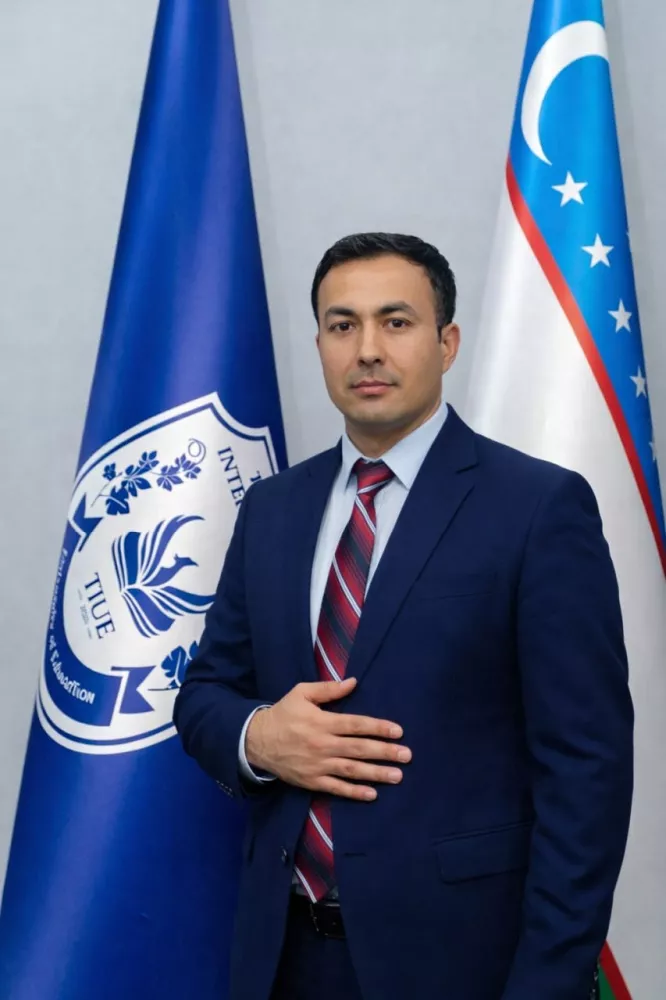
Turakulov Jahongir Anvarjon ugli
PhD, Senior Lecturer of the Department of Information Technologies and Mathematics
Samarkand State University named after Sh. Rashidov, 2020
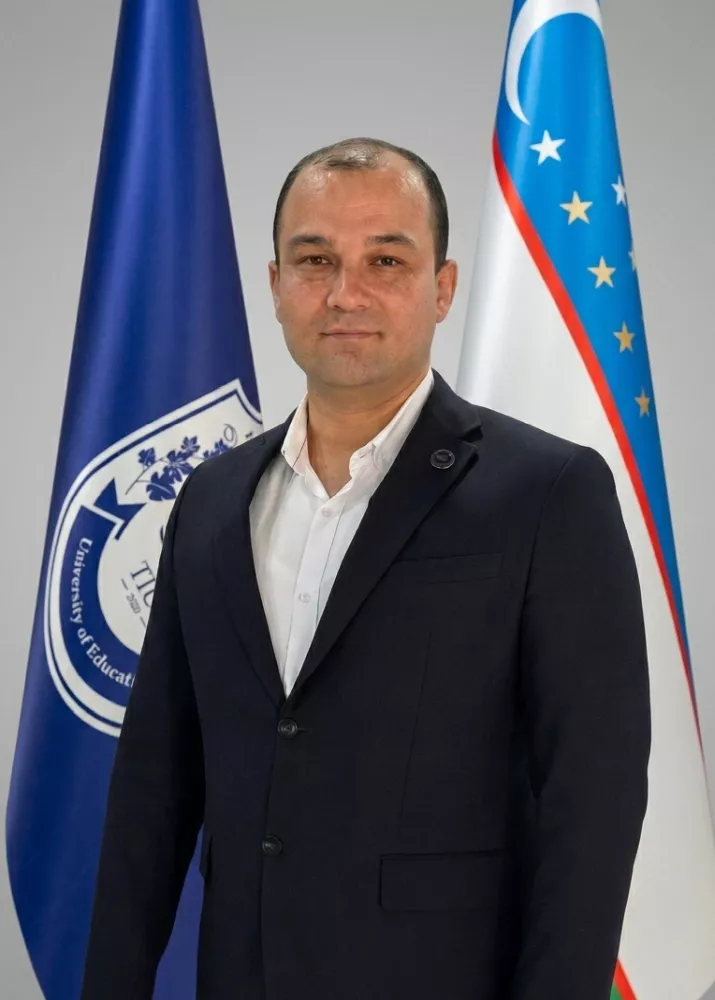
Jabborov Khayitmurod Ishmumin ugli
PhD, Associate Professor of the Department of Information Technologies and Mathematics
Tashkent University of Information Technologies named after Muhammad al-Khwarizmi, 2020

Ruziev Ulugbek Shukhratovich
Senior Lecturer of the Department of Information Technologies and Mathematics
National University of Uzbekistan named after Mirzo Ulugbek, 2019
Kim Elena Valeryevna
Senior Lecturer of the Department of Information Technologies and Mathematics
Volga State Technical University, 2017

Akhmedova Iroda Nurmukhamedovna
Senior Lecturer of the Department of Information Technologies and Mathematics
Tashkent State Technical University, 1994

Makhkamov Farkhod Aloviddin ugli
Senior Lecturer of the Department of Information Technologies and Mathematics
Tashkent University of Information Technologies named after Muhammad al-Khwarizmi, 2023
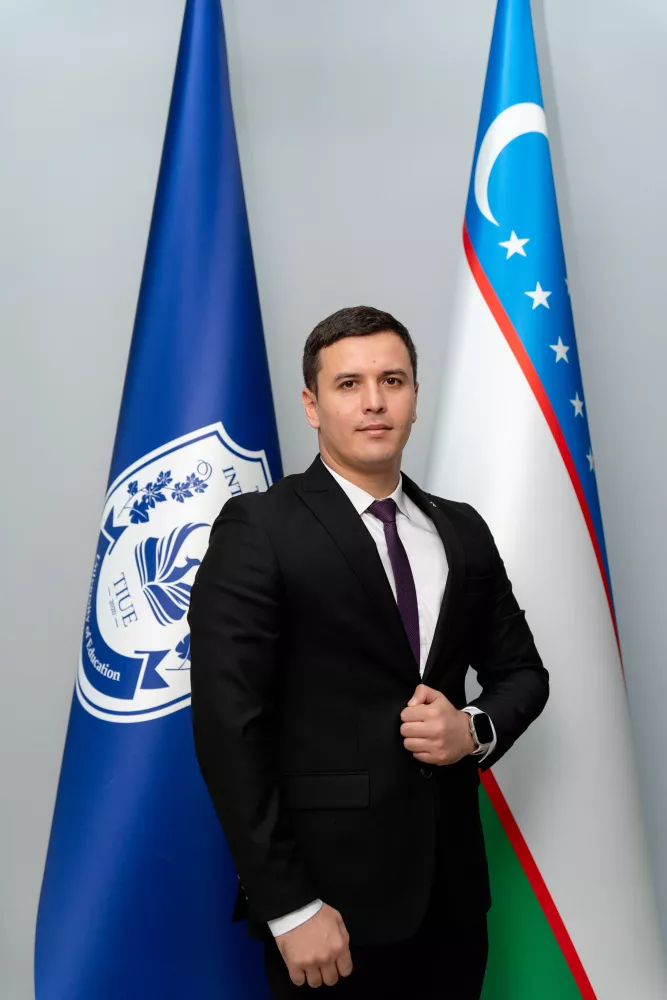
Normurodov Dilmurod Gayrat ugli
Senior Lecturer of the Department of Information Technologies and Mathematics
National University of Uzbekistan named after Mirzo Ulugbek, 2020

Usmanov Sarvar Nigmatovich
Senior Lecturer of the Department of Information Technologies and Mathematics
Tashkent University of Information Technologies named after Muhammad al-Khwarizmi, 2012
Frequently asked questions about the program
All questions and answersWhen will the entrance exams be held?
The schedule of entrance exams is announced by the university on its official website.
How much does the entrance exam cost?
The entrance exam is usually free of charge, but applicants should check the official announcement for updates.
Can I apply to TIUE for a second specialty?
Yes, applicants may submit an application for a second specialty depending on admission rules and availability.
When will the results of the entrance exam be announced?
Results are published on the official university website after the examination process is completed.
Is it possible to retake the entrance exam if the first attempt was unsuccessful?
Retake opportunities depend on the university’s admission policy for the given academic year.
Are there past exam questions for preparation?
Yes, the university may provide sample or past questions to help applicants prepare for the entrance exam.